 ES
ES
 FR
FR
 RU
RU
 DE
DE
 PT
PT
 AR
AR

Can foreigners own property in Thailand? Yes, but the law only recognises a handful of routes:
- Outright ownership of a flat in a condominium (freehold).
- A registered long-term lease (leasehold).
- Ownership through a Thai company.
- Usufruct and superficies — limited real rights to use land or a building without owning the land itself.
The detail on each route follows below: what a foreigner actually gets, which documents are needed, and where buyers most often go wrong. It is worth reading the full guide to buying property in Thailand as a foreigner first, where the freehold condominium, the Land Code Act and the whole route for a foreign buyer are brought together in one place.
Contents
Can foreigners own property in Thailand?
There is no single yes-or-no answer to what can foreigners legally own in Thailand: the scope of ownership depends on the type of asset. On a flat in a condominium, a foreigner gets outright ownership on the same terms as a Thai buyer. On a house, a villa or land underneath either, only indirect rights are available: a lease, a limited real right of use, or control through a company.
- Freehold — gives the right to sell, bequeath and mortgage the asset with no time limit.
- Leasehold and the limited real rights — always carry a fixed term and must be registered at the Land Office, or they offer no protection against third parties.
- A company structure — adds a corporate layer between the buyer and the asset, with its own requirements for how the share capital is structured.
Nationality makes no difference: can Americans own property in Thailand on the same terms as a European or Asian buyer? Yes — the entire set of restrictions is tied to the type of asset, not to the buyer's passport.
Property in Thailand
 T.H. Group Phuket Co., Ltd
 Harmony Group
 Rhom Bho Property PLC
 Vip Thailand Group
 BOAT PATTANA CO., LTD
 ESM DEVELOPMENT
 Origin Property
 Sunny Holding
Freehold condominium ownership and the 49% foreign quota
Freehold condo ownership Thailand is the only route where a foreigner becomes the outright owner of the asset in the fullest sense: with no time limit, and full rights to sell, let, mortgage or bequeath the unit, just like any Thai buyer.
There is one firm condition attached: the Thailand condominium foreign quota caps foreign ownership at 49% of the total floor area in any single building, calculated by area rather than by the number of units. That quota is fixed by the Condominium Act, and the rule is uniform across the whole country — no local authority can raise or lower it for an individual project, no matter how many developers or owners are selling units inside the same block.
One practical consequence follows: the same buyer can register several flats in one building if the remaining allowance permits, but the last available studio in a block where the 49 percent foreign quota explained has already been used up cannot be bought, even if the seller is willing to sell. The building's management company is required to track the remaining quota and will normally confirm it in writing on request — a verbal assurance from a sales agent is not enough. Current listings, with the ownership route stated on each one, can be seen in the condominiums in Thailand section.
Registering a freehold purchase requires proof that the funds came from abroad in foreign currency, confirmed through the FET form issued by the receiving Thai bank when the transfer lands. Without it, the Land Office will not register the transfer of ownership to a foreign buyer, even where the building's quota is not exhausted and the seller is ready to sign immediately.
Leasehold ownership: the 30-year registered lease
Leasehold ownership Thailand 30 years is the standard route to a house, a villa or land when freehold is not available. It is a registered lease, not ownership: the foreigner gets the right to use the property for the term of the contract, not a right over the land itself. The agreement can be signed directly with an individual, with no company or Thai partner required, which makes a lease simpler on paper than a usufruct or a right of superficies.
Registration at the Land Office is compulsory for any lease running longer than three years — without it, the right offers no protection if the land is sold to someone else and gives no defence against demands from a new owner to vacate. The registration fee for a lease is 1.1% of the total rent for the full term, or of the appraised value of the right, whichever is higher; this and every other fee tied to each ownership route — including the transfer fee, the leasehold registration fee and stamp duty — are set out in full in the article on the taxes and fees that apply to each ownership type.
Developers often market a "30+30+30" structure as an alternative to a 90-year hold, but legally it does not work as a guarantee: a renewal is only a contractual promise from the landlord, not a real right, and Thailand's Supreme Court has repeatedly confirmed that such a promise does not bind a new owner of the land. The question of a 30 year lease vs freehold Thailand is worth settling by investment horizon rather than price alone: anyone planning to live there or hold the asset for longer than 30 years should build the cost and risk of renewal into the sums from the outset, rather than counting on a verbal promise.


Owning a house or villa: legal structures for foreigners
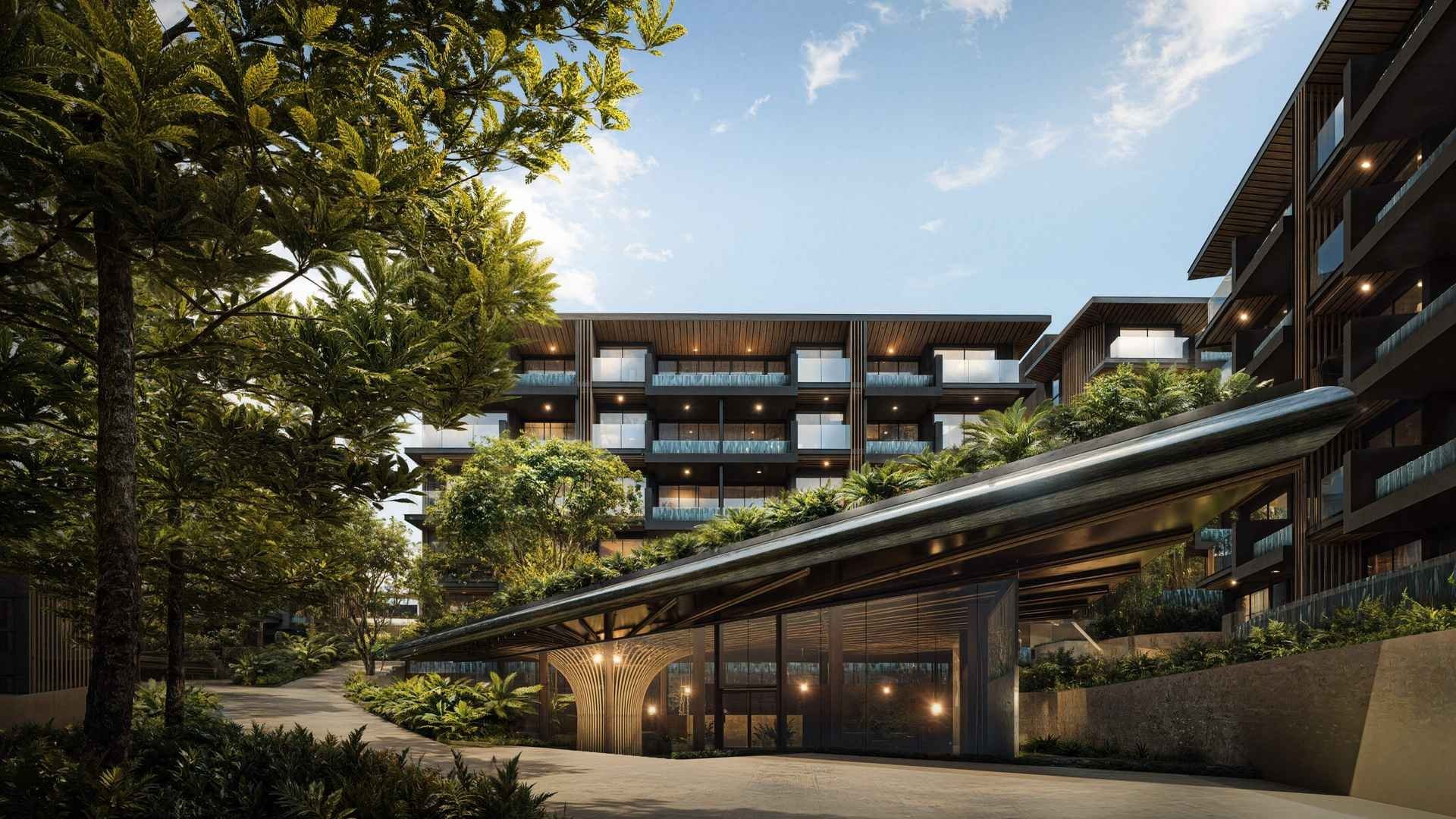
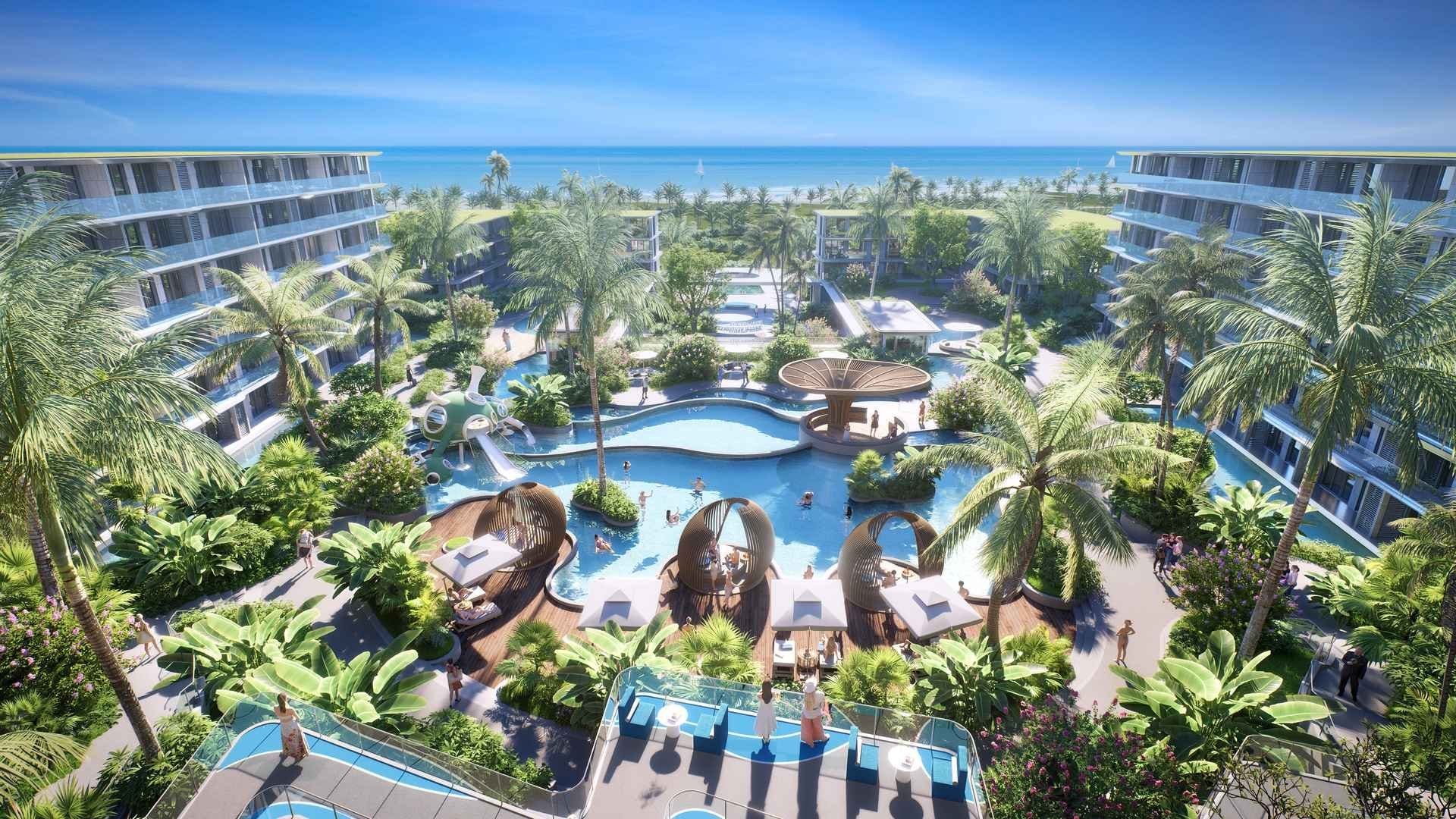
A house or villa on land is not a separate category of property so much as a combination of two things: the structure itself, and the right over the land beneath it. Can a foreigner own a house in Thailand or can a foreigner own a villa in Thailand? Yes, but always through one of the four lawful structures below rather than directly, and often through a combination of two: one right over the land, a second over the building itself. Current villas and houses in Thailand listings state the ownership structure attached to each property, which is worth checking before enquiring further.
| Structure | What the foreigner gets | Main limit or risk |
|---|---|---|
| Usufruct | Use of someone else's land and any income from it | Does not automatically pass to heirs unless the contract says so |
| Superficies | Separate ownership of a building on someone else's land | The right over the land itself still needs its own arrangement |
| Thai company | Control over land or a villa via a legal entity (foreigner limited to 49% of the capital) | The structure being ruled a nominee arrangement voids the deal |
| Marriage to a Thai national | Indirect access, via land registered to the Thai spouse | The spouse's personal-property status is not finally guaranteed by a court |
Usufruct. Usufruct Thailand is a real right to use someone else's land and to draw an income from it, without owning the land itself. It can be granted for life or for a fixed term and is registered at the Land Office.
The registration fee is 1% of the appraised value of the right, plus 0.1% stamp duty; where the right is granted without payment, between spouses or close relatives, the registration cost is minimal — sometimes no more than 100 baht. The key limit is already in the table above: a usufruct is tied to a specific person and, by default, does not pass to their heirs unless the contract expressly says otherwise.
Right of superficies. Right of superficies Thailand means separate ownership of a building standing on someone else's land: a foreigner can be formally registered as the owner of a house or another structure even where the land underneath belongs to somebody else. Superficies can be transferred and sold separately from the land, which sets it apart from a usufruct, which is tied to a specific user. In practice, this structure is often combined with a lease or a usufruct over the land itself: one right covers use of the plot, the second covers legal ownership of the house on it.
Thai company ownership. Thai company property ownership is a way to control land or a villa through a legal entity, where the foreigner is allowed to hold no more than 49% of the capital, with the remaining 51% held by Thai shareholders. On paper, the company rather than the foreigner is the registered owner of the land — and that is lawful, provided the Thai shareholders genuinely take part in the company rather than holding their stake in name only.
Nominee company Thailand property risk is serious: if the authorities can show that the Thai co-founders act as nominee shareholders — formally holding a stake but contributing no real capital and taking no part in management, serving only as cover for foreign land ownership — the structure and the deal itself can be ruled void. A separate lawful route exists through BOI: BOI land ownership Thailand foreigner status can allow a company promoted by the Board of Investment to hold land needed for an approved investment project, but this concession is designed for industrial and commercial investment, not for a holding company set up to buy a villa for personal use.
Marriage to a Thai national. Marriage to Thai national property does not automatically give a foreign spouse rights over land: by law, the land is registered in the Thai spouse's name as personal property, not as a joint asset. Both spouses must sign a standard declaration at the Land Office confirming that the funds used are the Thai spouse's personal property, not property acquired jointly during the marriage — without that declaration, registration cannot proceed.
A signed declaration is not a cast-iron guarantee for the future: Thailand's Supreme Court has held that such a declaration does not, on its own, settle the final legal status of the land — property acquired during a marriage is presumed joint by default unless proven otherwise. A foreign spouse is better off keeping the source of the purchase funds separate from joint accounts, rather than relying solely on the formal signature at the Land Office.
Can foreigners own land in Thailand?
No — direct ownership of land by a foreign individual is closed off by the Land Code Act with no exceptions, regardless of the size of the deal or how long the person has lived in the country. Every lawful route covered above — leasehold, a Thai company, usufruct and superficies — grants some form of use or control, but never ownership of the land itself.
Can foreigners inherit property in Thailand? Land is a special case: the Land Code Act technically allows land to be registered to a foreign heir with the Interior Minister's permission, but that provision is tied to bilateral treaties, the last of which lapsed back in 1970, so in practice permission cannot be obtained. A foreign heir to land, including a surviving spouse, must sell the inherited plot within a year. A condominium is different: if the heir meets the ordinary requirements of a buyer — living in Thailand permanently or transferring funds from abroad — they can register ownership of the unit within the same 49% quota; if not, the inherited flat also has to be sold within a year. Smaller units in the apartments in Thailand section tend to be the simplest case in practice, since they sit furthest from the quota limit on most buildings.
Thai land title deeds: Chanote and Nor Sor 3
Thai land title deed types determine which rights can even be registered on a given plot — a question that matters for a lease, a usufruct and a right of superficies alike, wherever a foreigner is registering one of these rights over the land.
| Title deed | What it confirms | Boundary accuracy | Can a lease/usufruct be registered immediately |
|---|---|---|---|
| Chanote (Nor Sor 4 Jor) | Full ownership title | Precise, GPS-surveyed | Yes, with no restrictions |
| Nor Sor 3 Gor | Confirmed possessory right | Surveyed, less precisely than a Chanote | Yes |
| Nor Sor 3 | Possessory right without a precise survey | Boundaries not fixed | Requires a 30-day public notice before the deal |
A Chanote is the strongest form of land title in Thailand: its boundaries are fixed by GPS survey, the document carries a red seal, and a lease, usufruct or superficies can be registered on that land with no restrictions. A Nor Sor 3 Gor, marked with a green seal, carries a similar set of rights but with a less precise survey; that kind of plot can usually be upgraded to a Chanote through a separate procedure. Land held under a plain Nor Sor 3, without the "Gor", has no fixed boundaries at all, and any transaction requires a month's public notice — this is the title most often linked to boundary disputes, and a lease or usufruct should only be registered on it after a separate legal check. The comparison of Chanote vs Nor Sor 3 above applies just as much to a lease or usufruct as it does to an outright land purchase.
"Before registering any right over land — a lease, a usufruct or a right of superficies — the first step is to check the type of title deed on the land itself: on a plain Nor Sor 3 without a fresh survey, the boundary risk falls on a leaseholder just as much as on a buyer."
Frequently Asked Questions
No, direct ownership is never available. Only indirect routes are open: leasehold, a Thai company, usufruct or a right of superficies.
Yes, but not the land beneath it: the house or a standalone structure can be held through superficies or a company, while the land itself is only available on lease or through a usufruct.
The maximum registered term is 30 years. A further 60-year renewal, the "30+30+30" structure, is a contractual promise, not a right guaranteed by law.
Yes, provided Thai shareholders hold at least 51% of the capital and genuinely take part in the company. Nominee ownership with no real participation is unlawful.
Land — in practice, almost never: ministerial permission depends on a treaty that has not existed since 1970, so the plot has to be sold within a year. A condominium can be inherited within the same 49% quota if the heir meets the ordinary buyer requirements.
Once an ownership structure is settled, the transaction itself follows the same process regardless of route: how the buying process works once you choose an ownership structure — from due diligence through to the reservation deposit and the transfer of ownership at the Land Office — runs to the same pattern for freehold and leasehold alike, though the paperwork required differs at each stage.
Browse current listings across the country in the property in Thailand catalogue.

Comments